This year I raced Newport to San Diego, my first overnight race and my first time sailing internationally. I had originally planned to race the Ensenada route, but one of my crew members mistook his Real ID for a valid passport and was convinced his driver’s license would get him back into the United States. I opted not to risk leaving him with border patrol, changed the plans, and I’m glad I did. It was outstanding.
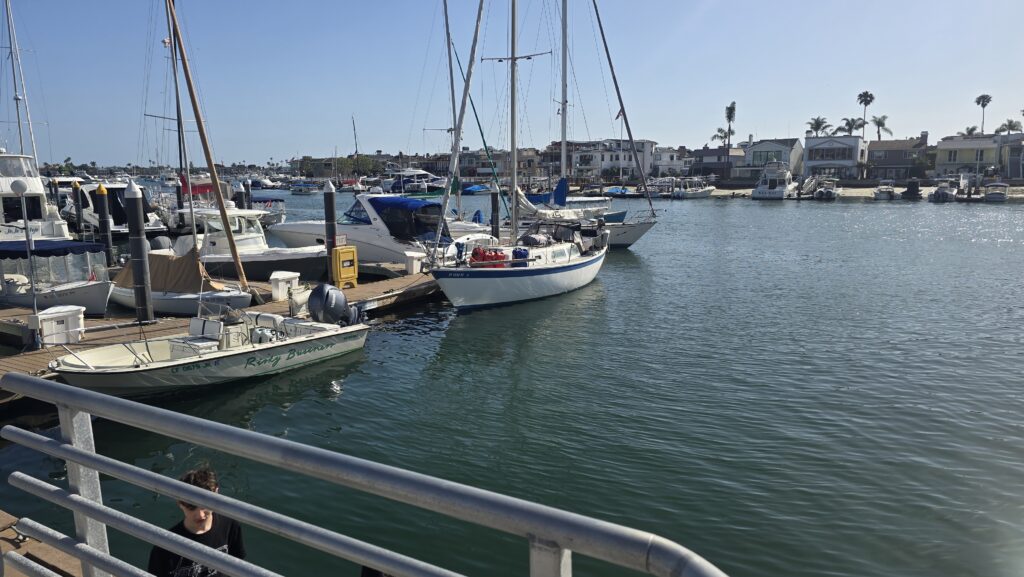
I sailed the boat down to Newport the weekend before, stopping at Isthmus along the way, and left her at Bahia Corinthian Yacht Club, taking advantage of our reciprocal privileges. After putting the boat to bed, I took the train home to work a few days before heading back Wednesday evening to begin preparations. The marina was packed, more boats than slips, so they put us on a med tie. I had watched videos of it but never actually done it, and of course the universe decided to throw a 7 knot crosswind at me for my first attempt. It took three tries but I got her in, stern to the dock, and I will absolutely be counting that as a win. My crew arrived Thursday and everything was coming together, until Friday morning when I woke up to a non-functional bilge pump. After pulling the system apart, I found that every wire was badly corroded and neither the float switch nor the pump was salvageable. Fortunately, a generous club member offered me a ride to West Marine, where I picked up a couple of manual pumps as backup. I made it back just in time to check in for the race.
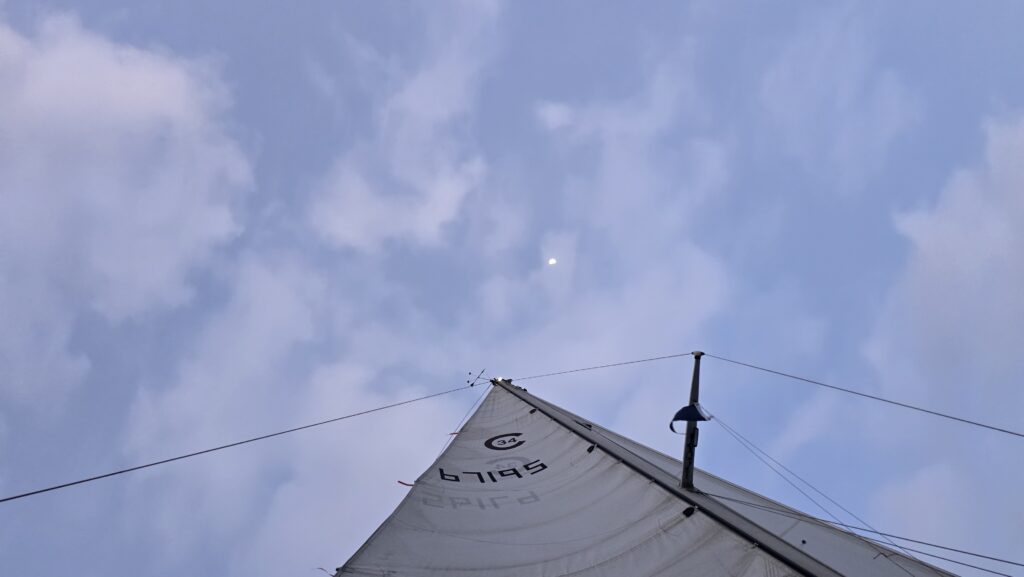
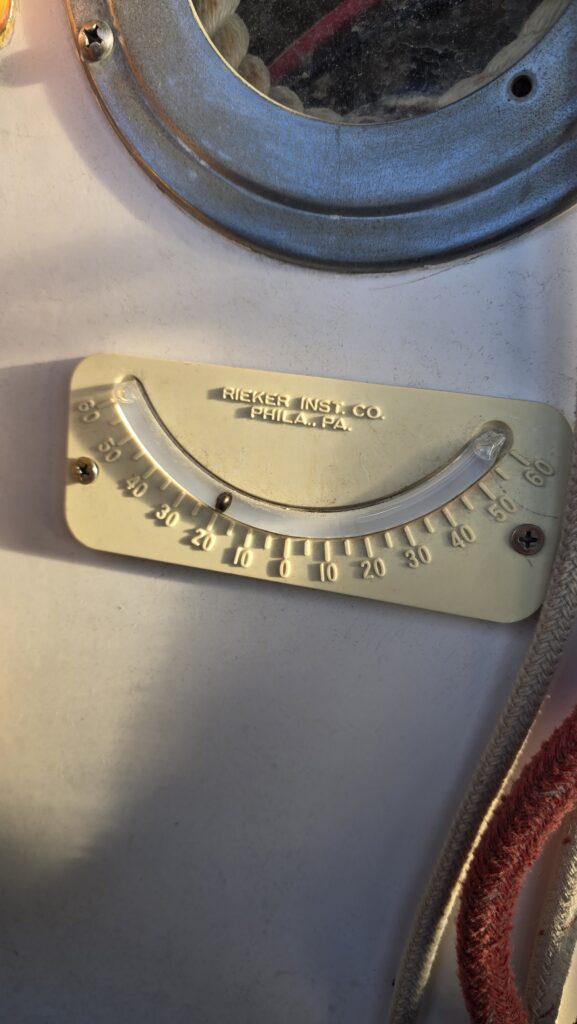
We got off to an exciting start, perhaps a bit too exciting. We misread the starting signals and crossed the line early, were recalled, and executed a clean gybe around the race committee boat to get going. It was blowing 10 to 12 knots from the south at the start, and my Cal 34 leaned into it and plowed ahead. As the wind built to a sustained 15-plus knots, I threw in a reef over my crew’s objections. It may not have been strictly necessary, but it made the boat considerably more comfortable and kept us from sliding to leeward. We sailed through it and waited for the wind to clock later in the evening. Eventually it came around to the beam, we shook out the reef, balanced the sails, set the autopilot, and let the boat do her thing for hours, sailing at hull speed until sunset, when we lost about a knot as the breeze softened.
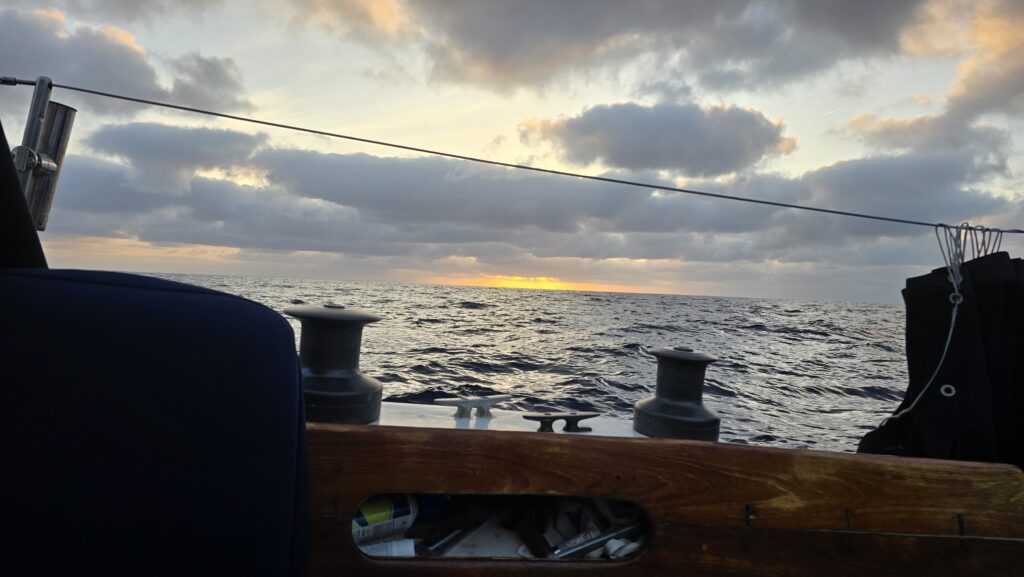
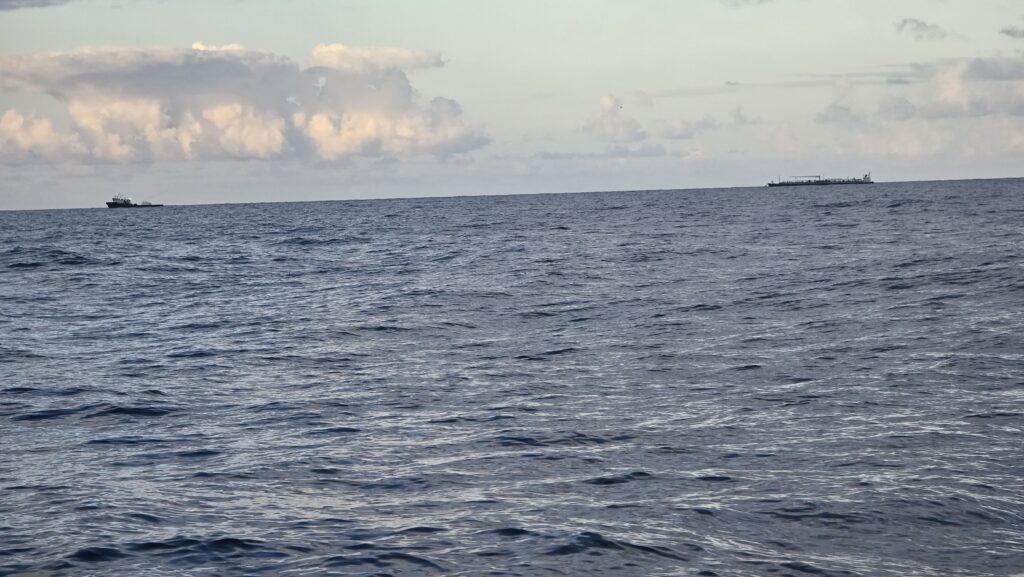
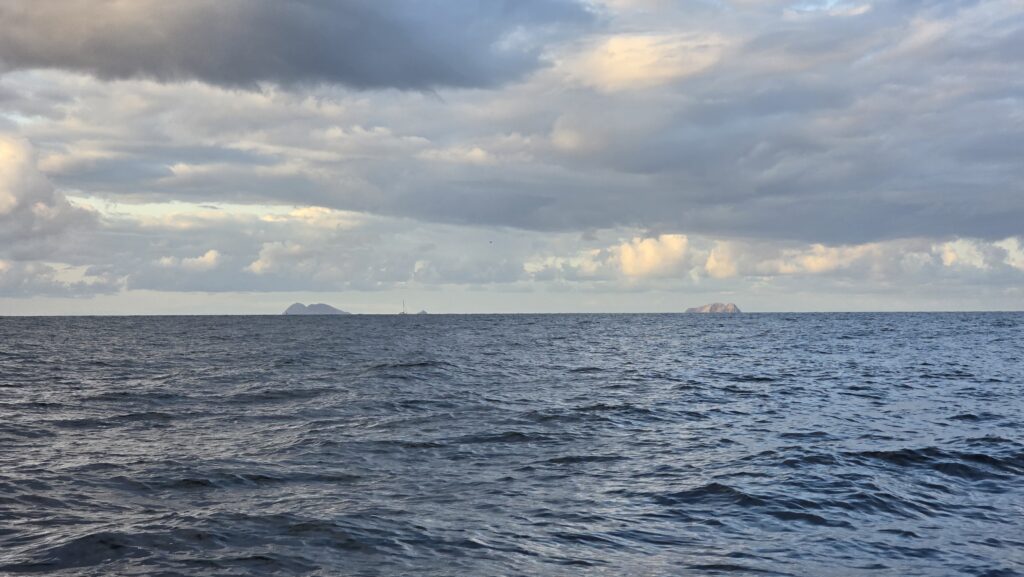
My crew generously let me rest through the night, with only a few interruptions. The most memorable was a tug named Robyn J, which was towing an enormous, poorly-lit barge two miles behind her. Navigating around that in the dark without radar was nerve-wracking, but the captain was helpful and talked us safely around. Around 4 a.m., we roused the entire crew to help round North Coronado Island. None of us had done it before, so we wanted all hands on deck to manage any surprises. Even at night, it was beautiful. We gybed the main and ran wing-on-wing to get clear of the wind shadow before turning back up toward San Diego. The waves had been building all night, by this point running about five feet at eight seconds, square on the beam. The Cal 34 handled them without complaint. I, unfortunately, did not. I got seasick and was fortunate to have a capable, good-humored crew who kept things moving while I recovered.
We finished around 7 a.m. and came into San Diego Harbor. I should mention that we did all of this with a kayak lashed to the side, eight jerry cans of fuel and water on deck, 250 feet of chain, an ice chest, and a full load of cruising gear aboard. This was not a stripped-out race boat. If you have ever thought offshore racing was out of reach, I am here to tell you it is not. We raced, and we raced well, with all of it. Anyone can do this.
Thanks again to our reciprocal privileges as AYC members, Southwestern Yacht Club graciously hosted us for a few nights at no charge.
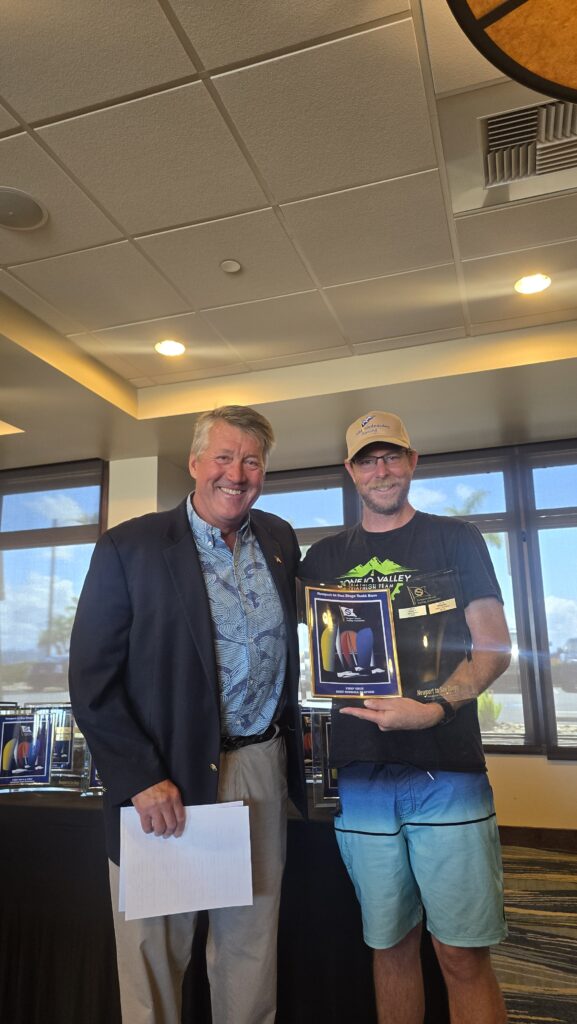
The awards ceremony was held at Silvergate Yacht Club, where the hospitality was excellent. I won my class. Admittedly, I was the only boat in it, but a win is a win. More gratifying, by my calculations we also beat a Cal 40 and a Cal 48 on corrected time, so I like our chances even with more competition. NOSA Vice Commodore John Sangmeister put on a wonderful ceremony and even offered to cover the cost of the trophy plaques, which is traditionally paid by the winner. A generous and classy gesture.
Over the course of the trip I visited several yacht clubs, some of them quite fancy, with dress codes, full kitchens, and the works, and they were all gracious hosts. But after seeing what’s out there, I’ll say this: I am proud to fly my AYC burgee. We have a wonderful club full of wonderful people, and I hope some of you will join me next year so we can show the rest of Southern California just how great we are.
The Long Way Home
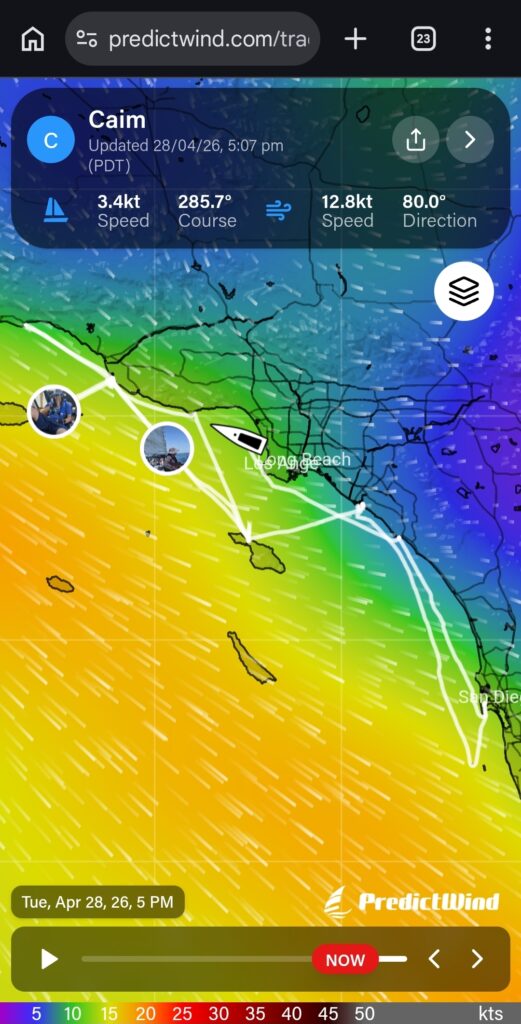
After the awards ceremony we spent the rest of the day exploring San Diego and getting the boat ready for the return trip, which I already knew was going to be a grind. Heading north means fighting the current and the wind the entire way. The original plan was to make for Catalina, but after a little weather routing I decided that was pushing it a bit far and set our sights on the free anchorage at Dana Point instead.
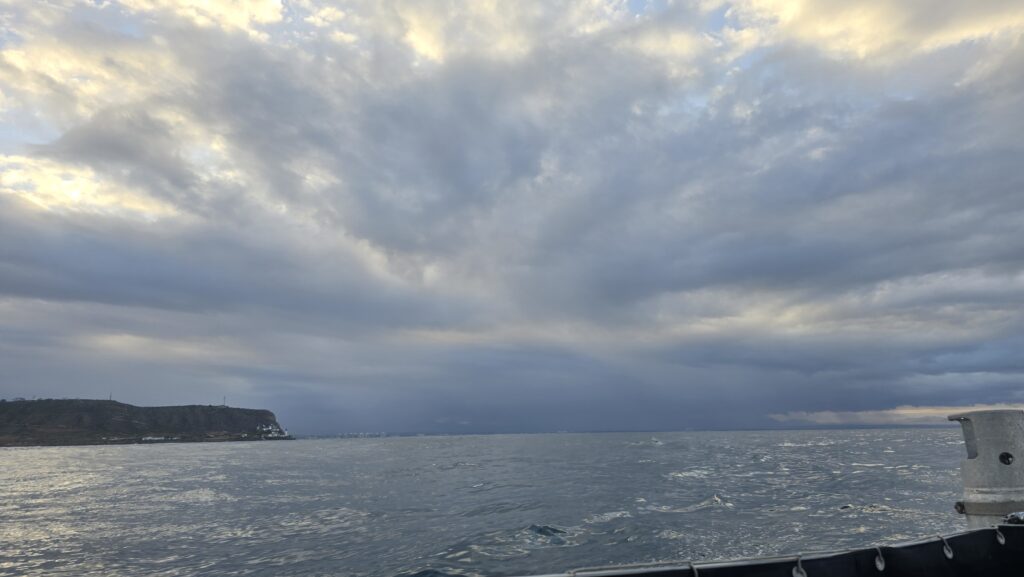
Dave, the most seasoned sailor on the boat, got hit with seasickness on the way up, and the rest of the crew was running on fumes. So I took the helm and let everyone rest while I motored the 70 miles north solo. It was a long, exhausting day, and the anchorage at Dana Point is tiny, but we made it and that was good enough.
Tuesday morning we woke up planning to push through to Paradise Cove in Malibu, with Palos Verdes or Long Beach as a backup if the crew needed a shorter day. The passage north was full of surprises. We spotted an enormous white shark and a pod of dolphins going absolutely wild on a bait ball, launching themselves straight out of the water like they were competing for something. It’s moments like that that make you remember why you do this.
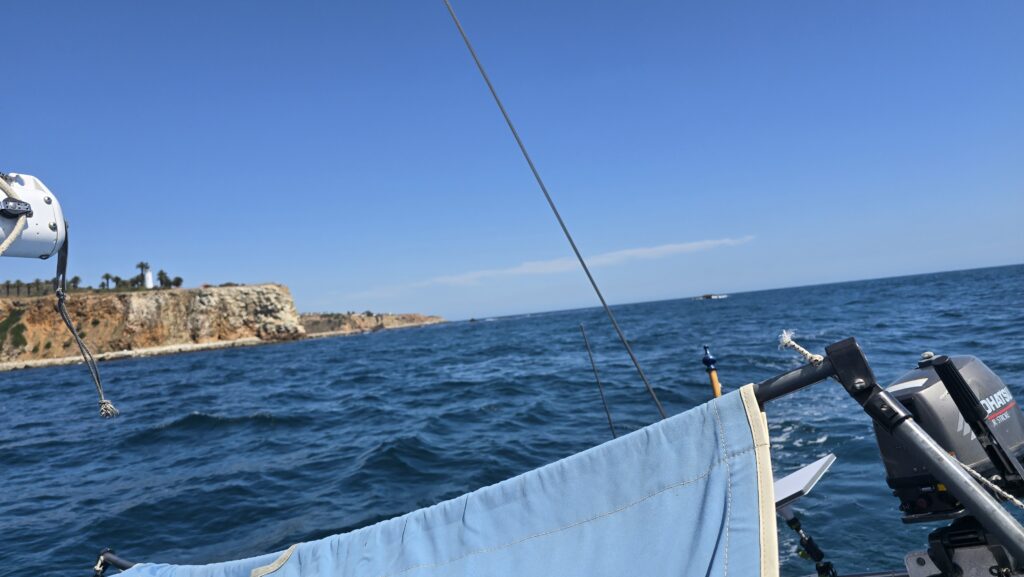
We rounded Palos Verdes Point and conditions had been smooth up until then. The wind started filling in and it looked like we might actually get to sail the last stretch up to Paradise Cove, so we shut the engine down, unfurled the headsail, and pointed the bow toward home. The wind picked up nicely around the point, 15 knots, and I threw a reef in to keep things comfortable and the boat flat. My Cal 34 doesn’t really need a reef until 17 or 18 knots, but when I’m cruising I’d rather give up half a knot than have everyone hanging off the high side. Things eased up a bit and I shook it back out. We were sailing.
Then the ocean decided it wasn’t done with us yet.
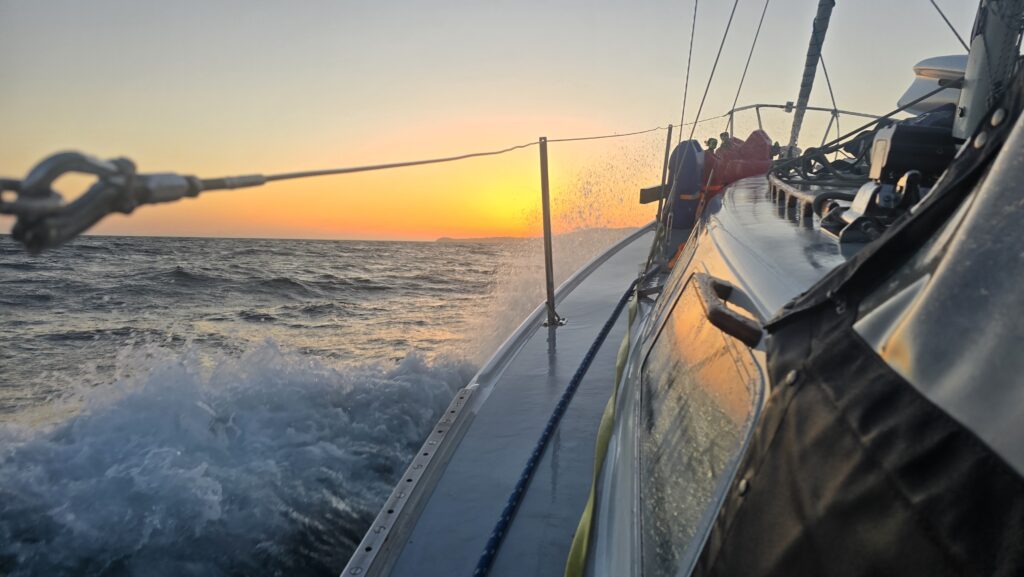
The wind and seas started building again and it turned into a hard beat. Everything was wet. A big wave came over the bow and when I looked forward, my kayak had broken free from its rack and bent the stainless steel mount nearly in half. I got forward as fast as I could, grabbed a shroud with one hand and the kayak with the other, and muscled it back aboard. Not my most graceful moment, but it stayed on the boat.
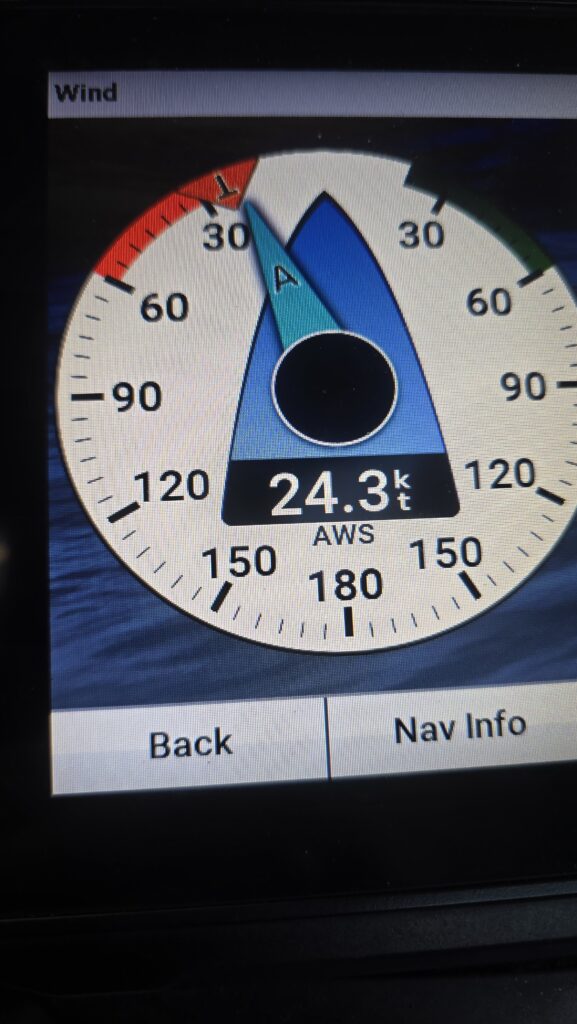
By this point we had 20 knots sustained and building, a loosely lashed kayak on deck, and conditions that were still deteriorating. I made the call to roll up the sails and motor into the weather. We got into Paradise Cove after dark, dropped the hook in the wrong spot, and had a very rolly night on the anchor. Traci saved the evening by making soup and tea for everyone. We ate, we went to sleep, and in the morning we motored home.
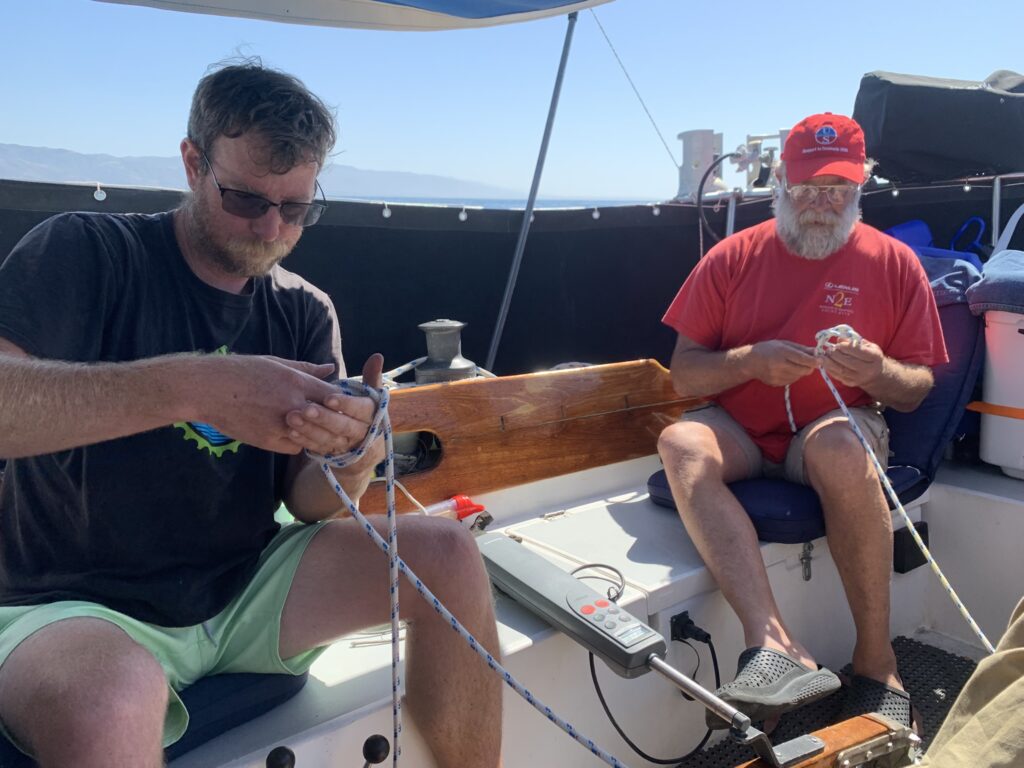
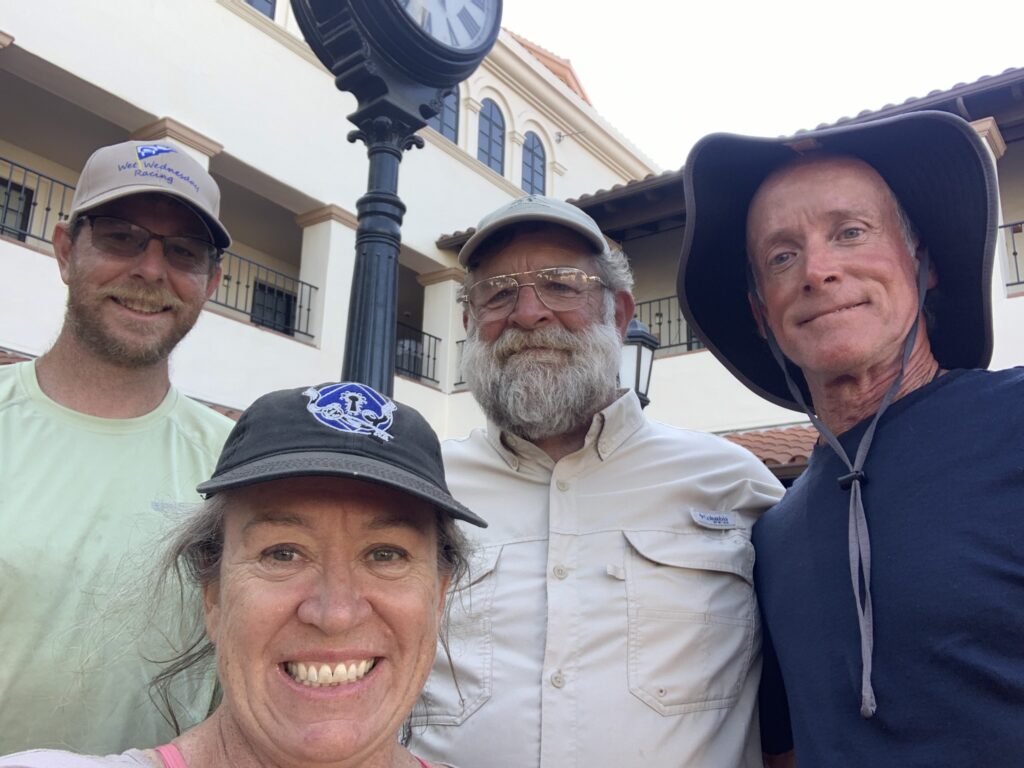
And that was that. An overnight race, an international border, a seasick crew, a runaway kayak, and 70 miles at the helm alone in the dark. None of it would have been possible without an incredible group of people. Dave, Traci, and Darin, thank you for crewing this adventure with me. You kept the boat moving when I couldn’t, you made soup in a rolling anchorage, and you never once complained about what was, by any measure, a 500 mile voyage. I could not have asked for a better crew.