The moment I’d been waiting for had finally arrived: The Catalina Classic. A 32-mile paddleboard race from Two Harbors, Catalina to Manhattan Beach. My friend Kim had qualified again, and once again, I was her Captain.
Last year had gone flawlessly. I thought I knew what to expect. But the sea had other ideas.
The Crossing
I arrived at the boat Thursday night. The stillness of the harbor was thick, broken only by halyards tapping against masts. I checked lines, topped off fuel, and ran through the mental list I always do before an offshore run.
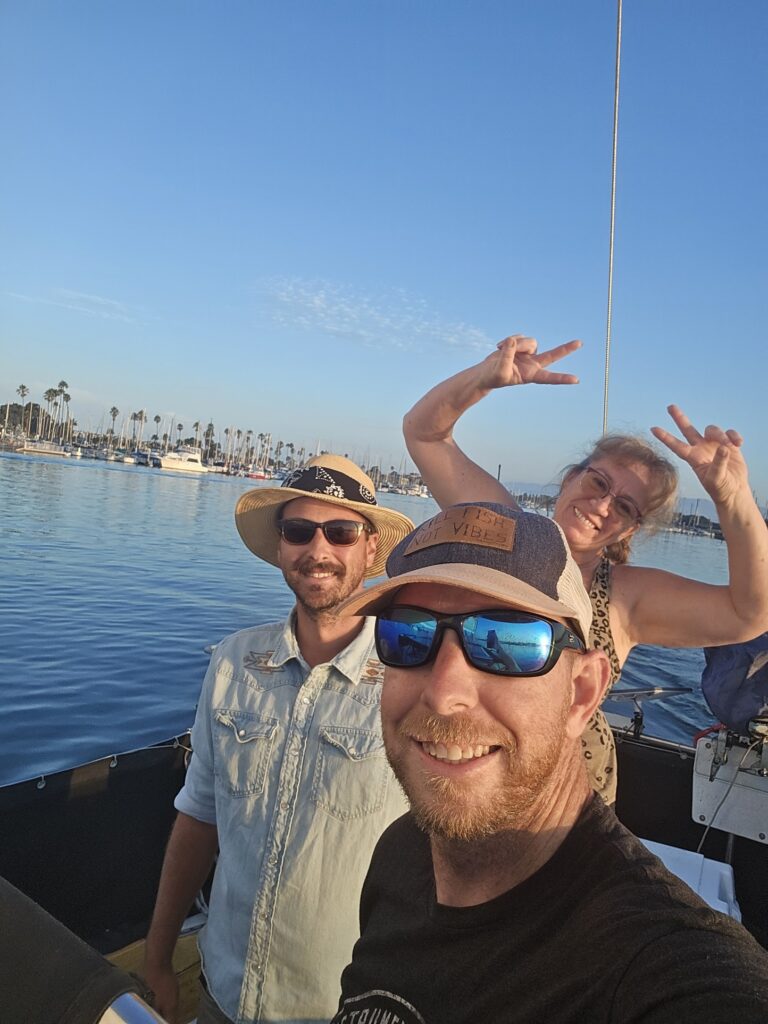
By 4 a.m. Friday, Alec, Traci, and I were up in the dark, moving like shadows. Coffee steamed in our mugs, flashlights swept across the deck. At 5:30, we slipped the dock lines and motored into the predawn glow.
The water was glassy. The only sound was the motor and the hiss of our wake. A couple hours in, the sea came alive: dolphins—hundreds of them—surrounded us. They darted under the bow, leapt high enough to catch the sun, and rolled on their sides to watch us watching them. We laughed like kids, soaking in the magic of the ocean.
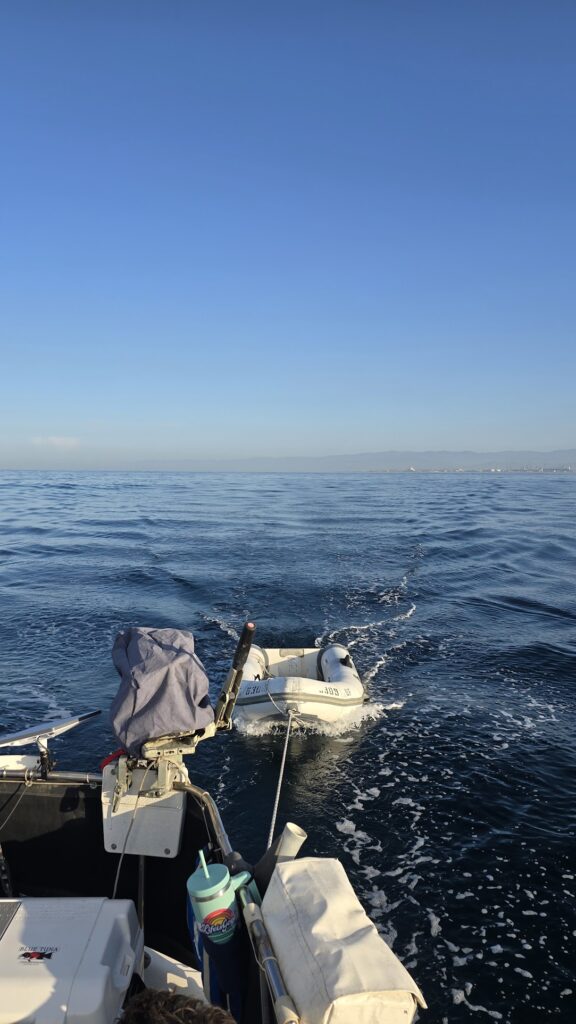
Six hours of motoring later, the first gusts brushed our faces. We killed the engine, unrolled the headsail, and let the boat stretch her legs. By late afternoon, the wind was pressing 20 knots. I reefed down, twice, and we carved our way toward the shadow of Catalina.
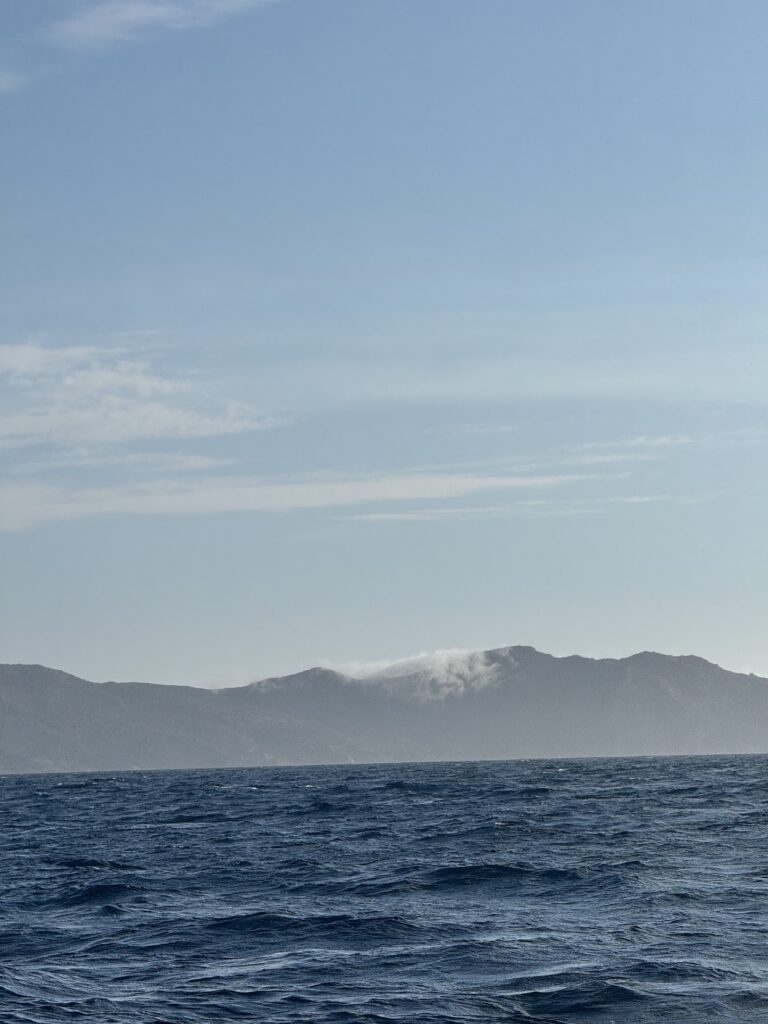
When we finally moored up, the silence of the cove wrapped around us. Normally that’s when I feel relief. This time I felt… beat. Not just tired. Something was wrong, though I couldn’t name it yet.
The Sickness
Morning brought the answer. I woke feeling unwell, stomach in full revolt. My body had turned mutinous. This wasn’t seasickness—it was sickness sickness.
Kim and Dorian arrived on the ferry. I should have stayed down, but captains don’t get to quit. The Captain’s meeting waited. I forced myself into the dinghy, teeth clenched, hands trembling. On shore, I nodded through instructions I could barely hear, my body screaming to collapse.
That night we sat at the restaurant. Kim bought dinner for the crew, as tradition dictates. I stared at a poke salad, willing myself to eat something. The lights blurred, voices faded. Eventually Alec took me back to the boat, where I folded into my bunk with nothing but my bucket for company.
Outside, the crew prepped the boat for race day. Inside, I wondered how I was going to survive it.
Chaos Before Dawn
Midnight. A shout ripped me awake.
“Captain! The dinghy’s gone!”
The word hit like a slap. My head spun. Every skipper knows that sinking dread: you’re responsible for everything. I stumbled out, still fevered, and peered into black water. The wind howled in the rigging, waves slapped the hull, and the space where my dinghy should have been was just empty, open water.
I called Harbor Patrol, and scanned the horizon for any silhouette. Nothing. I imagined it drifting further, pushed by the night wind—miles away already. Helpless, I sank back into my bunk.
But sleep didn’t last. At 4 a.m., another sound. High-pitched. Strange. Like a peacock. But there are no peacocks on Catalina.
It was a cat. In the water. Desperate, flailing, its head barely above the chop.
Chaos exploded on deck. Traci was already peeling off layers, ready to dive. Kim, strung tight with race nerves, was frantic. Harbor Patrol sounded as shocked as I was when I called it in. Finally, a stranger in a dinghy rowed past and scooped the poor thing out, saving it from certain death.
We hadn’t even left the mooring, and the night had already carried more chaos than some entire passages.
The Race Turns
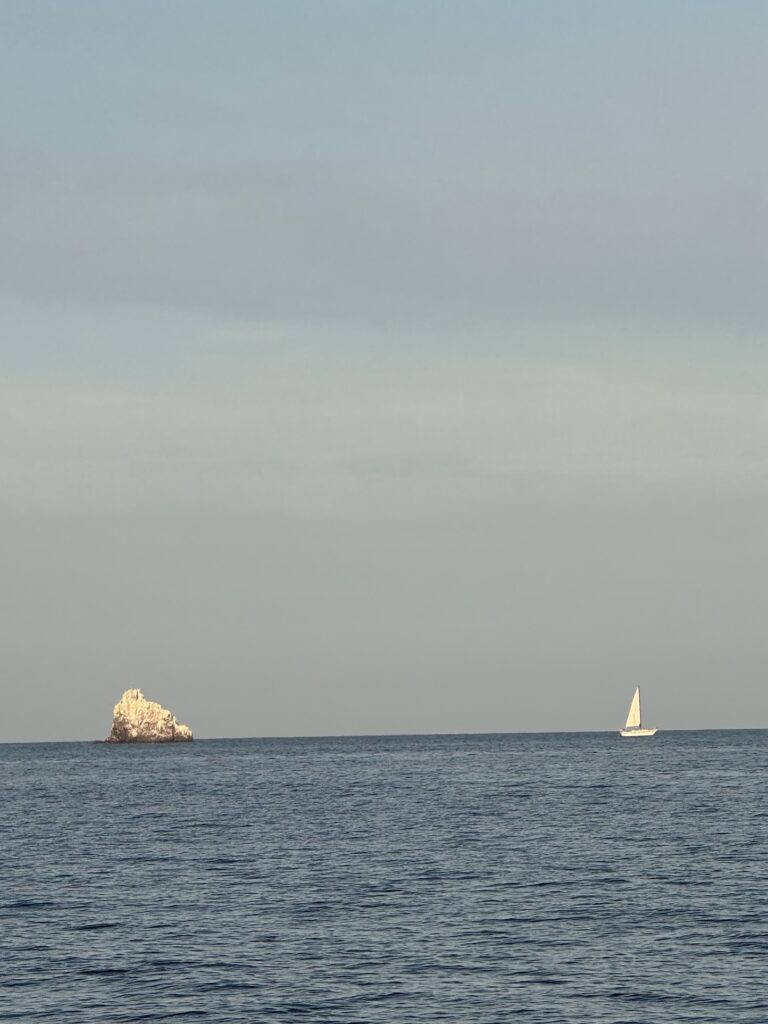
At sunrise, we cast free and motored to Bird Rock to meet Kim. For a moment, everything felt normal. The first golden light spread across the ocean, the island at our backs, Kim’s paddleboard cutting clean lines across the swell. We were the first support boat to link with our paddler, handing her fresh water and fuel for the miles ahead.
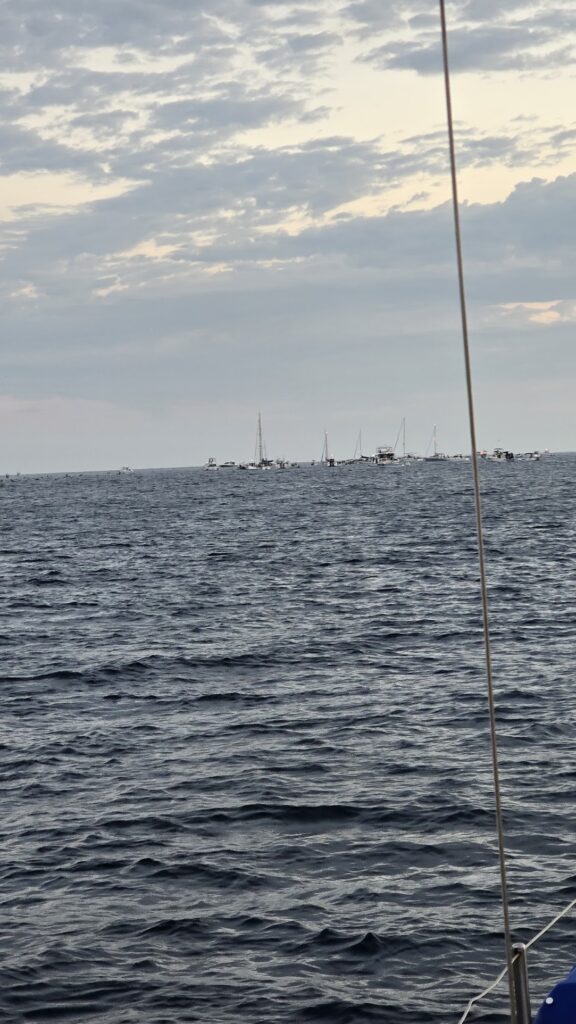
Then the wind shifted. Swells built—four feet, then more.
From my cockpit, I watched Kim fight. stroke after stroke, her board pitching under her. She clawed up the face of each wave only to stall at the crest. It looked like agony disguised as forward progress, at times barely moving.
The wind pressed harder, square on our beam. The boat rolled violently, rail digging into the water. Dorian lost her footing, staggered, and slammed face-first into the cabin top. I froze, certain she was going overboard. For one suspended moment, I saw her body hanging above open water. Then the lifelines caught her. She came away shaken, scratched, but aboard.
I was useless. Sick. Hollow. Slumped in the corner with my “emotional support bucket.” Alec’s hands were firm on the tiller, calm and commanding, holding us together.
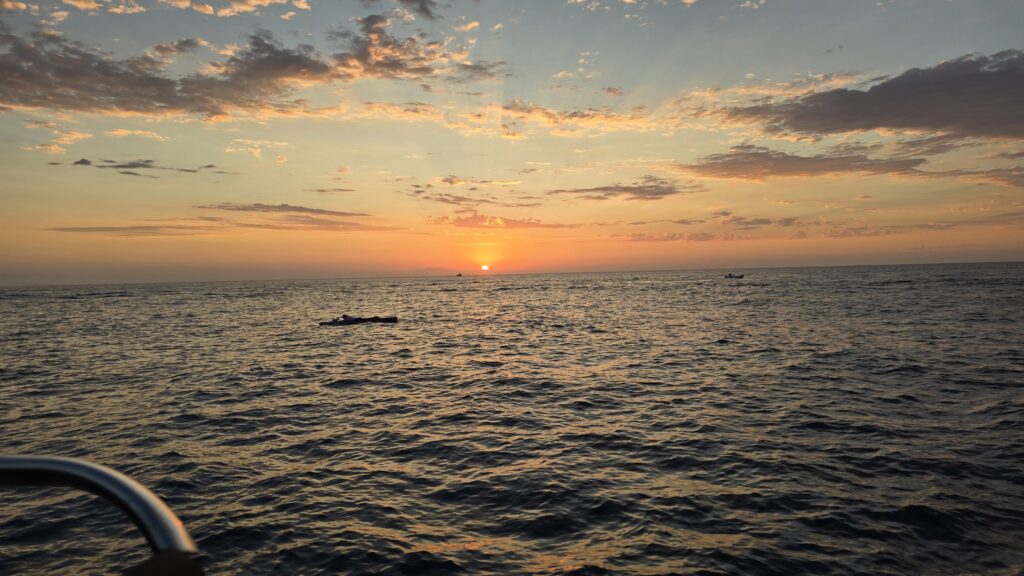
And then the hum died. A sputter. A cough. Silence.
The engine quit. Instruments blinked black. Power gone.
The boat’s momentum fell away until all that was left was the sound of water slapping fiberglass. A stillness that felt heavier than the wind. We tried everything we could in that moment to restart. Nothing.
And I had to make the hardest call: Kim’s race was over.
Adrift
Telling her was brutal. She had trained all year for this. Every early morning paddle, every aching mile—crushed in an instant. I called her over, voice heavy. She looked at me, eyes blazing, not ready to hear what I had to say. But I had no choice.
Without a support boat, she was disqualified. Worse—she was in danger. Boards were flipping in the swell. Her tracker was strapped to her board, not her. If she lost it, she’d vanish into that rolling gray sea.
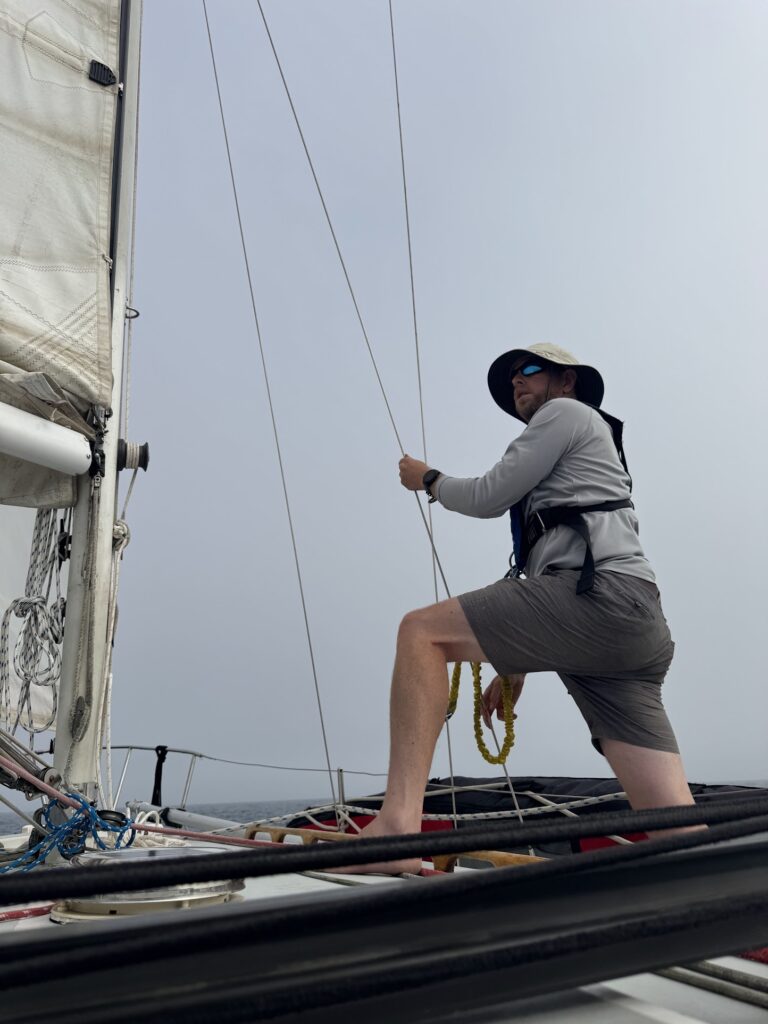
We limped under sail, inching toward Bird Rock. But then the wind shadow swallowed us. Air gone. Sails limp. The boat began sliding backward, out to sea.
Tow Boat US: seven hours. Seven. Too long.
I grabbed the radio mic. “Any vessel able to assist, this is SV Caim…”
Minutes stretched. The silence on channel 16 was unbearable.
Then a reply.
A red hull cut across the horizon—Bay Watch. They knew Kim’s boyfriend. After a sharp scolding for not sailing well while sick, they tossed us a line. For free.
We were saved.
On the fuel dock, I spotted my dinghy. Tied up. Ragged. Missing its outboard, its rub rail, even an oar. But somehow, still afloat.
The first crack of luck, after days of none.
Good Vibes and Generators
That night, sitting at the bar, I still felt the fever’s weight, but Alec nudged me toward a man at the counter.
“Zack. Good energy. Let’s talk to him.”
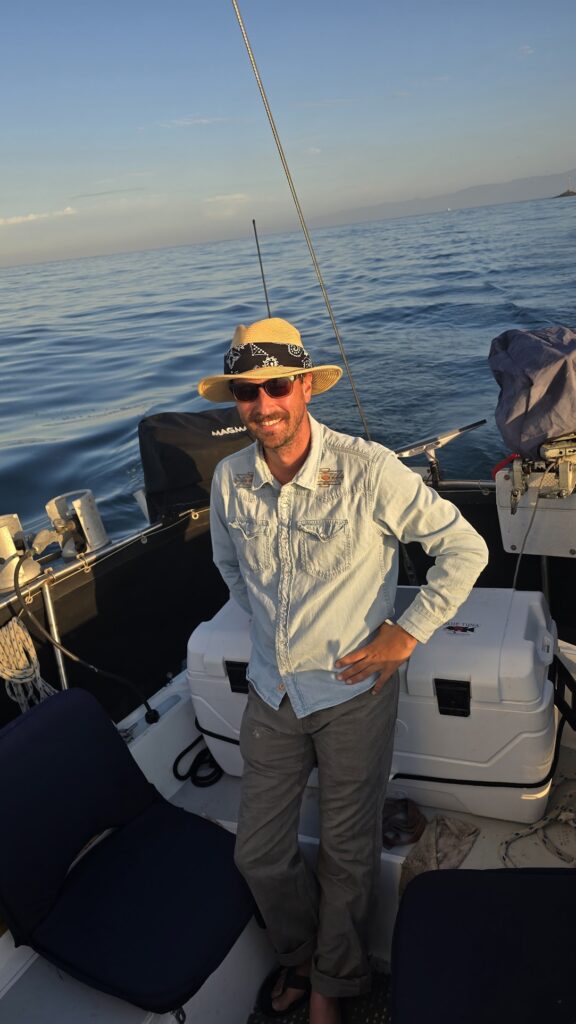
Zack had a beard to his chest and a calm, knowing demeanor. I told him everything—the shutdown, the dead batteries, the limp back, and my shaky plan to fix it to get home.
He grinned. “I’ve got a Honda 2000. You can borrow it.”
The little red generator roared. The cabin lights blinked back to life. The boat breathed again. Hope flooded in.
Maybe we weren’t stuck after all.
With hope renewed, Alec and I lingered at the bar, shooting pool with our new friends Bryn and Mel. The clack of balls echoed against the walls, laughter mixing with the hum of music and voices. For the first time in days, I felt like myself again. Things were starting to turn around—and maybe, just maybe, I wouldn’t have to sink my boat after all.
The Road Back
The plan was simple: split the trip into two legs. Catalina to Paradise Cove, then Paradise Cove to home.
We motored out, dolphins escorting us once more. Alec scrambled eggs, and for the first time in days, I ate. The taste was heaven. Relief washed over me as we dropped anchor off Paradise Cove, the boat finally still.
Morning broke clear. We pointed north, beating into headwinds. With ten miles to go, nearly out of fuel, we raised sail, hardened up, and heeled hard. The rail kissed water and we were sailing.
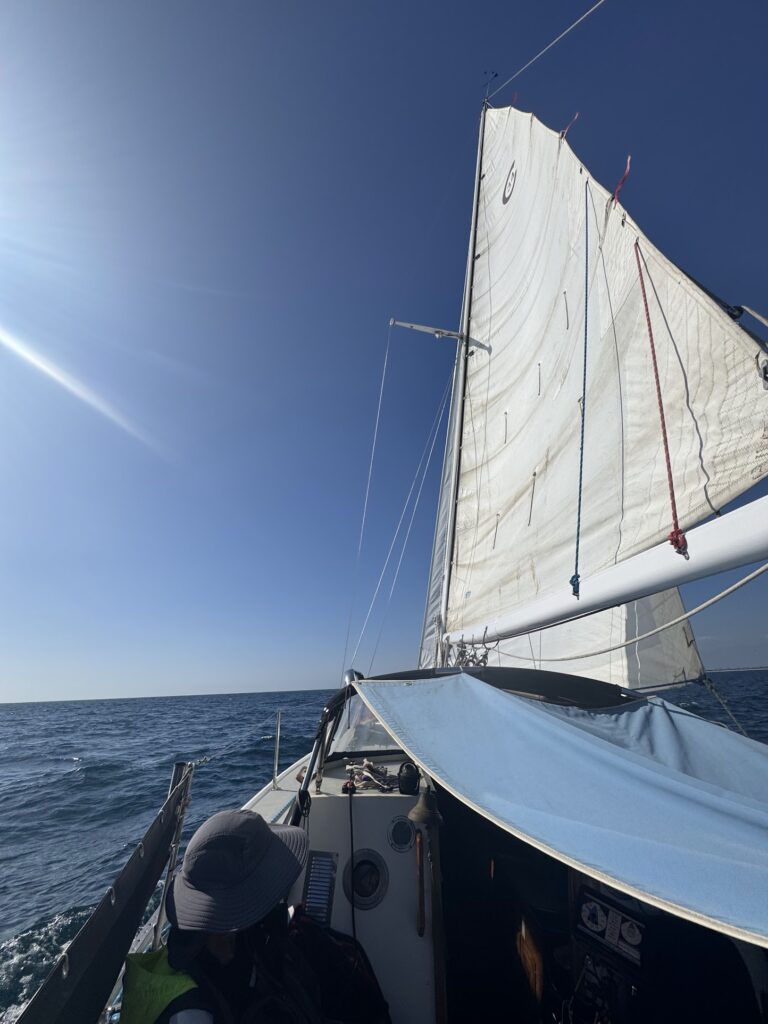
Five times. Ten. Fifteen. Each tack slammed us against swell and current. We beat up the California coast like seasoned sailors.
Finally, the breakwater appeared. Gray stone walls rising like a promise. Two more tacks. One last push.
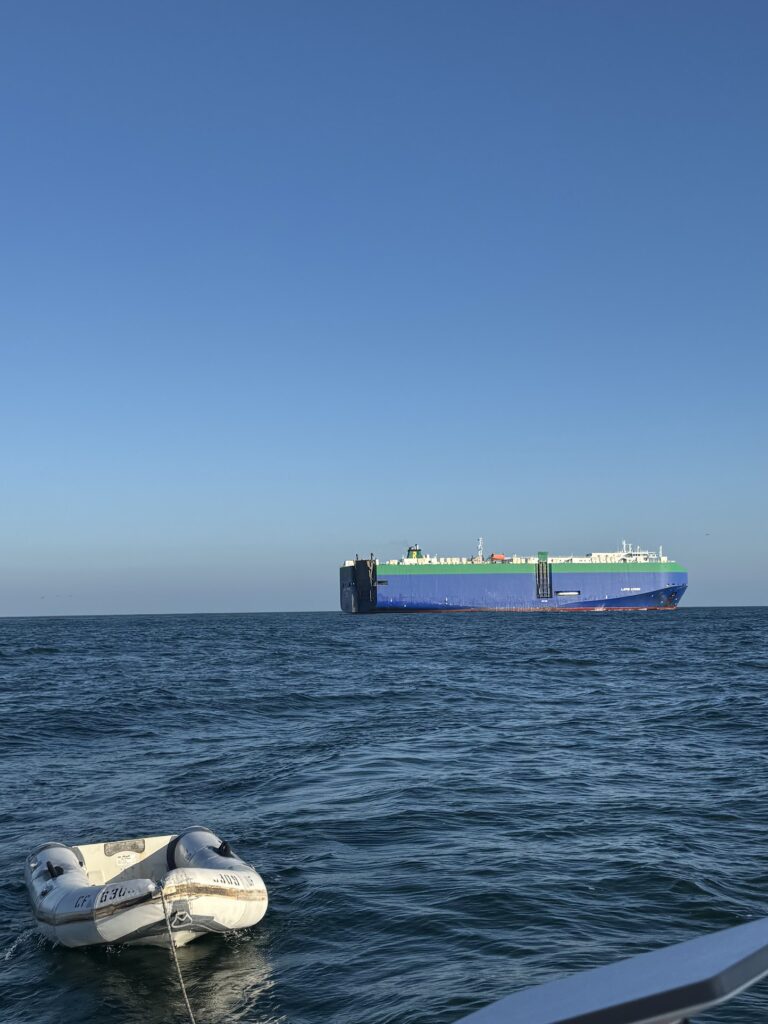
We sailed through the harbor mouth, tired, hungry, but home.
I bought the crew Indian food, though no meal could capture my gratitude.
Lessons From Chaos
The Catalina Classic wasn’t the adventure I expected—it was the adventure the ocean gave me.
I learned that control is an illusion. Out there, it doesn’t matter how well you prepare or how carefully you plan. The sea decides. Sickness doesn’t wait for permission. Dinghies wander. Cats fall overboard. Batteries fail when you need them most. And sometimes, the only thing keeping you together is a bucket in the cockpit and a crew who refuses to give up.
But I also learned something else. I learned that people step up when you can’t. Alec, who quietly took command when I was too sick to move. Traci, ready to dive into dark water for a drowning cat. Kim, who gave everything she had until I had to make the call no Captain ever wants to make. Even strangers—Bay Watch with their tow, Zack with his little red generator, the nameless dinghy rower who saved a cat’s life.
The ocean strips you down until you’re raw. Then it shows you who you really have beside you.
When we finally tied up in our slip, lines secure and silence settling over the boat, I felt a kind of gratitude I can’t put into words. Not just for making it home, but for still having a boat. For still having a crew that trusted me, even when I was barely hanging on.
I’ve replayed those moments—when the engine died, when Kim’s race ended, when the boat slid backward out to sea—over and over in my head. Each time, I come back to the same truth: most of life, like the sea, is outside my control. The best I can do is keep moving, lean on the people around me, and take things as they come.
Or, as Alec said that day, when it all seemed ready to fall apart—
you just vibe it out.
Ahh Grasshopper, you begin. Nice prose. Do you know a Steve Bigler?